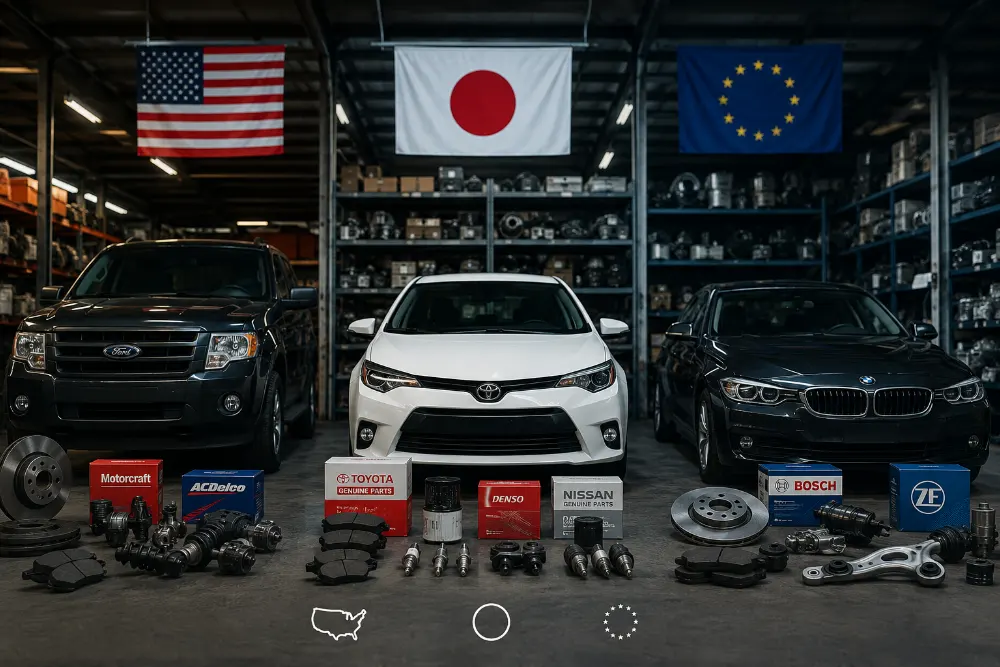
American, Japanese, or European Cars – How Accessible Are Their Parts in Georgia?
When purchasing a vehicle, buyers usually focus primarily on the price. This is natural, but many people overlook one of the most practical questions at this stage: how much will it cost to maintain this car after one, three, or five years? Parts availability is exactly the factor that often becomes one of the biggest challenges after the purchase.
In Georgia, this question is especially relevant because the market is divided into three major categories: American cars, Japanese cars, and European cars.
All three categories are widely represented on the Georgian market, but their maintenance requirements and parts availability differ significantly.
Which Cars Are Most Common in Georgia?
Before discussing the spare parts market, it is important to understand which vehicles dominate Georgian roads. According to Geostat data, more than 80% of registered vehicles in Georgia are older than ten years. Japanese vehicles lead this segment, particularly Toyota, Nissan, and Honda. American vehicles have entered the market rapidly in recent years, mainly due to the growth of imports from auctions. European cars – including BMW, Mercedes-Benz, and Volkswagen – are also common, although their ownership experience is different.
This is directly connected to the spare parts market: the more vehicles of a particular brand exist on the market, the higher the demand for their parts, and the easier it becomes to find replacements. This principle plays a key role in shaping the market.
Japanese Car Parts in Georgia – Easy to Find and Widely Available
Japanese car parts are the most accessible in Georgia. Finding parts for vehicles such as the Toyota Corolla, Prius, Camry, or Nissan X-Trail is usually not difficult, thanks to the large number of suppliers and repair shops available. However, popularity is not the only reason.
Japanese manufacturers have spent decades developing multiple models using the same platforms and engine families. For example, Toyota’s 1NZ engine components are used across several models, including the Yaris, Corolla, and Prius. The 2ZR engine family is also shared among models such as the Corolla and RAV4. This platform-sharing approach means that one component can serve dozens of vehicles, increasing supplier availability and making parts easier to find.
Honda follows a similar approach. Models such as the CR-V, Civic, and Accord often share engine families and components.
The used parts market is especially developed for this segment. Along with new components, many stores offer tested used parts imported mainly from Japan or Korea. For owners of older vehicles, this is often the most practical solution because the parts are usually original, while the price is significantly lower compared to new replacements.
American Car Parts – Growing Demand and Market Development
American car parts have become much more accessible in Georgia over the past three to five years. This change is mainly driven by the growing number of American vehicle imports, especially cars purchased from various auctions.
For brands such as Ford, Chevrolet, and Dodge, finding parts required much more time and effort five years ago. Today, essential components – including engine parts, braking systems, and suspension components – are widely available, especially for popular models.
The main exceptions are rare or less common vehicles. Specific parts for brands such as Lincoln, Buick, or Cadillac may still require special orders, with direct imports from the United States often taking 2–4 weeks.
Another important feature of the American vehicle parts market is the availability of used but functional components removed from salvage vehicles. This practice comes from the well-developed auto dismantling industry in the United States and has become increasingly relevant for vehicles imported into Georgia.
European Car Parts – High Quality and a More Complex Market
The situation is different when it comes to European car parts in Georgia. Brands such as BMW, Mercedes-Benz, Audi, and Volkswagen are widely represented, but their parts market operates differently.
German vehicle components are generally divided into two categories: original (OEM) parts and aftermarket alternatives. Original parts from manufacturers such as Bosch, ZF, and Valeo are known for their quality and precision. Aftermarket parts, especially those produced in China or Turkey, are much more affordable, but quality levels can vary significantly. Choosing the right part in this segment requires knowledge and caution.
Another challenge with European vehicles is electronics. For BMW or Mercedes models produced after 2010, replacing or programming electronic components such as ECUs, transmission control units, or adaptive suspension systems requires specialized equipment and expertise. Such services exist in Georgia but remain limited compared to general repair services.
Volkswagen is somewhat an exception in this category. Parts for models such as the Golf, Passat, and Tiguan are widely available, partly because the Volkswagen Group shares platforms with brands such as Skoda and SEAT, allowing greater parts compatibility.
Original, Aftermarket, or Used – What Is the Difference?
Vehicle parts in Georgia are generally divided into three main categories, each with its own advantages:
- Original parts (OEM) – These match factory specifications exactly. They are the most reliable option, especially for critical components where failure can affect other systems, such as engines and transmissions. However, original parts are not always easy to find for every brand and often require importing, which increases waiting time.
- Aftermarket parts – These are produced by third-party manufacturers but meet identical or similar specifications. Companies such as Bosch, Febi, Sachs, and Denso are original equipment suppliers for many manufacturers, meaning their products can offer a high-quality alternative without compromising reliability. These parts are generally easier to find and more affordable.
- Used parts – Especially for older vehicles, used components are often the most practical solution. In Georgia, the used parts market is particularly well-developed for Japanese cars, and in some cases, even discontinued components can still be found.
When Are Vehicle Maintenance Costs the Lowest?
The total cost of repairs depends on three main factors: the price of parts, labor costs at the service center, and how frequently the component needs replacement.
- Japanese cars perform well across all three areas because parts are widely available, mechanics are familiar with these vehicles, and components are generally durable. Owners of vehicles such as the Toyota Prius or Honda CR-V are usually in the most stable position. Routine maintenance, including oil changes, is simple and widely available at Georgian service centers.
- American cars, especially those with V6 or V8 engines, are often competitive in terms of parts prices. However, service costs can sometimes be higher due to specific tools or the need for experienced technicians. This situation is gradually improving as the number of American vehicles on the market continues to grow.
- European cars, especially those manufactured after 2010, require the most careful consideration. Parts are often more expensive, electronics are more complex, and specialized service is usually required. This does not mean these vehicles should be avoided – they can be a great choice when purchased with proper knowledge and realistic expectations.
How Does American Car Import Affect the Parts Market?
The connection is direct. The more vehicles of a particular brand enter the country, the more specialized repair shops appear, the wider the availability of parts becomes, and prices become more competitive.
The increase in vehicles imported from American auctions in recent years has directly affected the market for Ford, Chevrolet, and Jeep parts. Components that required special orders in 2018–2019 are now often available from stock at many auto parts stores. This cycle – import, demand, market growth, and service development – repeats across different brands.
Japanese cars have been established in the Georgian market for more than 30 years. American cars are currently in a growth phase. European vehicles operate under a different logic: premium segment parts remain specialized not because of market size, but because of the technological complexity of these vehicles.
What Should You Consider When Choosing a Vehicle?
Parts availability is only one factor, but a vehicle purchase decision should consider multiple elements simultaneously: VIN history, technical condition, age, country of origin, and costs influenced by new customs regulations. Many buyers choose a vehicle based only on the purchase price and only later discover the true annual maintenance costs.
This calculation should be made before the purchase. From vehicle selection to VIN verification, the Carmark team manages the entire process. Customers receive a complete picture of the costs and risks before making a final decision, making the buying process much easier.
Related Posts




Your dream car journey starts with our expertise

Popular pages
Explore
Recourses