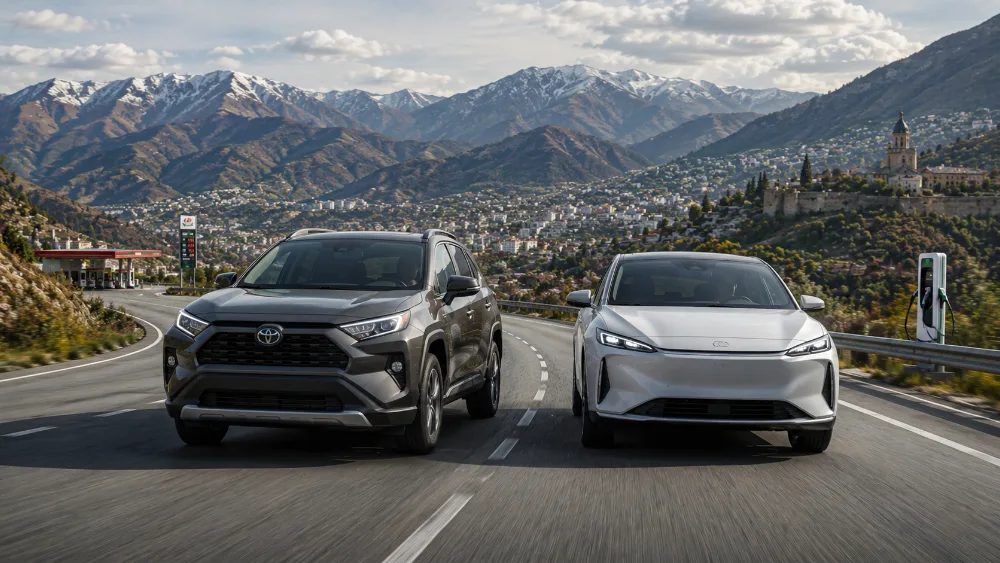
Hybrid or Electric Vehicle – Which Is More Economical on Georgian Roads?
Over the past few years, hybrid vehicles and electric vehicles have become increasingly popular in Georgia. This trend is driven by fluctuating fuel prices and growing concerns about vehicle maintenance costs, encouraging many buyers to consider alternative options. However, the most common question that comes with this choice is which type of vehicle is easier and more affordable to maintain.
The answer is not straightforward, and this blog will explore exactly that.
Two Technologies, Two Different Approaches
A hybrid vehicle operates using two power sources – an internal combustion engine and an electric motor. They complement each other: in the city, where frequent stops and starts are common, the electric system does more of the work, while on highways the gasoline engine takes over. The battery is recharged while driving and does not require an external charger. This is the main practical advantage of hybrids: you are not dependent on charging infrastructure.
An electric vehicle runs entirely on battery power. Its motor has a much simpler design with fewer moving parts. There is practically no traditional engine-related maintenance, but other questions arise: Where can it be charged? How far can it travel on a single charge? How often does the battery need to be replaced? We will answer these questions below.
Hybrid vs Electric Vehicle: Which Is More Economical?
A hybrid vehicle is a well-developed technology designed for everyday use. It performs especially well in conditions with frequent stops and short-distance driving. Fuel consumption decreases significantly, while the battery is continuously recharged through regenerative braking.
The situation changes on longer routes. At a constant speed, a hybrid relies more on its gasoline engine, and fuel consumption becomes closer to that of a traditional non-electric vehicle. The electric system is primarily designed for daily urban driving rather than long-distance highway travel.
Most 2025 electric vehicle models offer a range of more than 400–500 km on a single charge. However, this figure depends on temperature, driving style, and the use of heating or air conditioning. In winter, the range can decrease by 20–30%. Considering Georgia’s climate conditions, especially in mountainous regions, this factor has practical importance.
Georgia’s fast-charging network is developing, but coverage is still uneven. The situation is relatively good in Tbilisi, while finding a fast charger in some regions and on certain highways is not always easy. For drivers who mainly use their vehicle in the city and have access to charging at home or at work, this issue is rarely a major concern.
Maintenance Costs of Hybrid and Electric Vehicles
Hybrid maintenance costs come from having two systems – a gasoline engine and electric components. Oil changes and filters are still required, but the braking system experiences less wear because regenerative braking allows it to last significantly longer compared to conventional vehicles. Service availability is another major advantage of hybrids in Georgia, as almost any qualified auto repair shop can provide maintenance.
Electric vehicles do not require oil changes. Their routine maintenance costs are significantly lower. However, servicing them is not always as accessible. Diagnosing electric systems requires specialized equipment and expertise. Such workshops do exist in Georgia, but the available options are still limited compared to traditional car services.
Hybrid vs Electric Vehicle Batteries
Hybrid vehicle batteries are relatively small in size, which positively affects their lifespan. Toyota hybrid batteries, for example, often last 200,000–300,000 km without any intervention. Even 10–12-year-old hybrid vehicles on the Georgian market are frequently still operating with their original batteries, demonstrating the reliability of this technology.
Electric vehicle batteries are much larger, and frequent fast charging or exposure to extreme temperatures can accelerate degradation. Modern manufacturers typically provide an 8-year or 160,000 km battery warranty, although this does not always mean full battery replacement coverage in every situation. Battery degradation happens gradually: after five years, the range may decrease by 10–15%, which is often barely noticeable in everyday use. However, a complete battery replacement, if required, can be an expensive procedure.
Reliability and Risk of Failure
According to data from the German automobile association ADAC, based on 3.6 million real-world cases, electric vehicles aged 2–4 years break down 2.5 times less frequently than gasoline-powered vehicles.
It is also important to note that the most common cause of electric vehicle breakdowns is not the high-voltage battery. Instead, it is usually the standard 12-volt auxiliary battery – the same component that can cause problems in gasoline vehicles as well. Hybrid vehicles occupy a middle position in this regard: their maintenance is accessible, and the market has decades of experience with the technology.
The resale value of electric vehicles changes rapidly. New models are introduced frequently, battery technology becomes cheaper, and older models can lose value faster as a result. Over a three-year period, depreciation for electric vehicles is around 44–48%, while for hybrid vehicles it is approximately 46–52%. The figures are similar, but the brand and model play a decisive role.
Toyota Camry Hybrid and RAV4 Hybrid have maintained strong resale value in the Georgian market for years. This is largely the result of their reputation for reliability.
A hybrid vehicle is a good choice for people who do not have access to home charging, those who do not want to depend on specialized repair shops, or those who plan to replace their vehicle after several years. This technology requires fewer compromises and works without relying on charging infrastructure.
An electric vehicle in Georgia is best suited for those who have access to charging at home or at work, plan to keep the vehicle for the long term, and prioritize reducing daily operating costs. For drivers who meet these conditions, electric vehicles can provide significantly lower maintenance expenses and fewer issues over time.
Both technologies have their advantages. The right choice depends on the user’s needs, lifestyle, and reasons for choosing the vehicle.
The team at Carmark provides assistance with purchasing and importing both types of vehicles into Georgia. Vehicle selection, technical inspection, and a complete cost calculation are handled transparently before purchase.
Related Posts



Your dream car journey starts with our expertise

Popular pages
Explore
Recourses